Wherever She Is
Wherever she is, her period should not determine how far she can go.
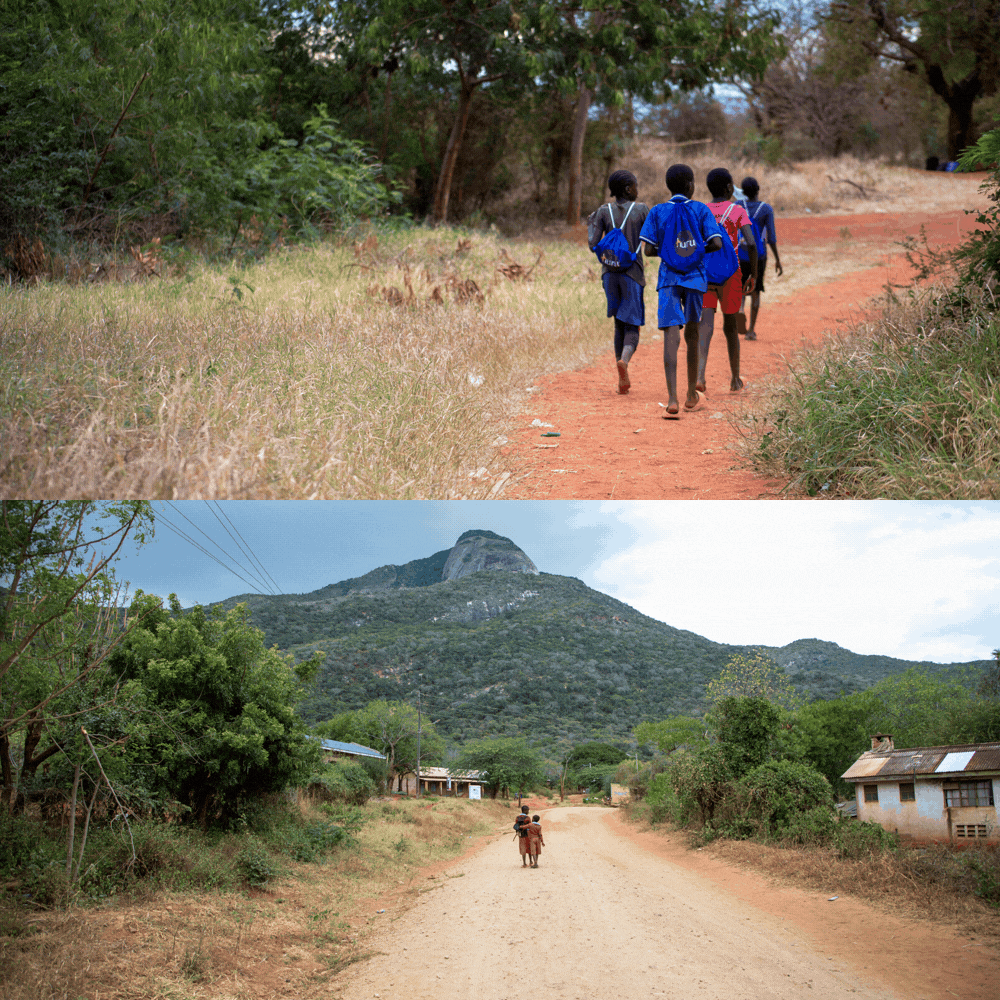
Taita Taveta County
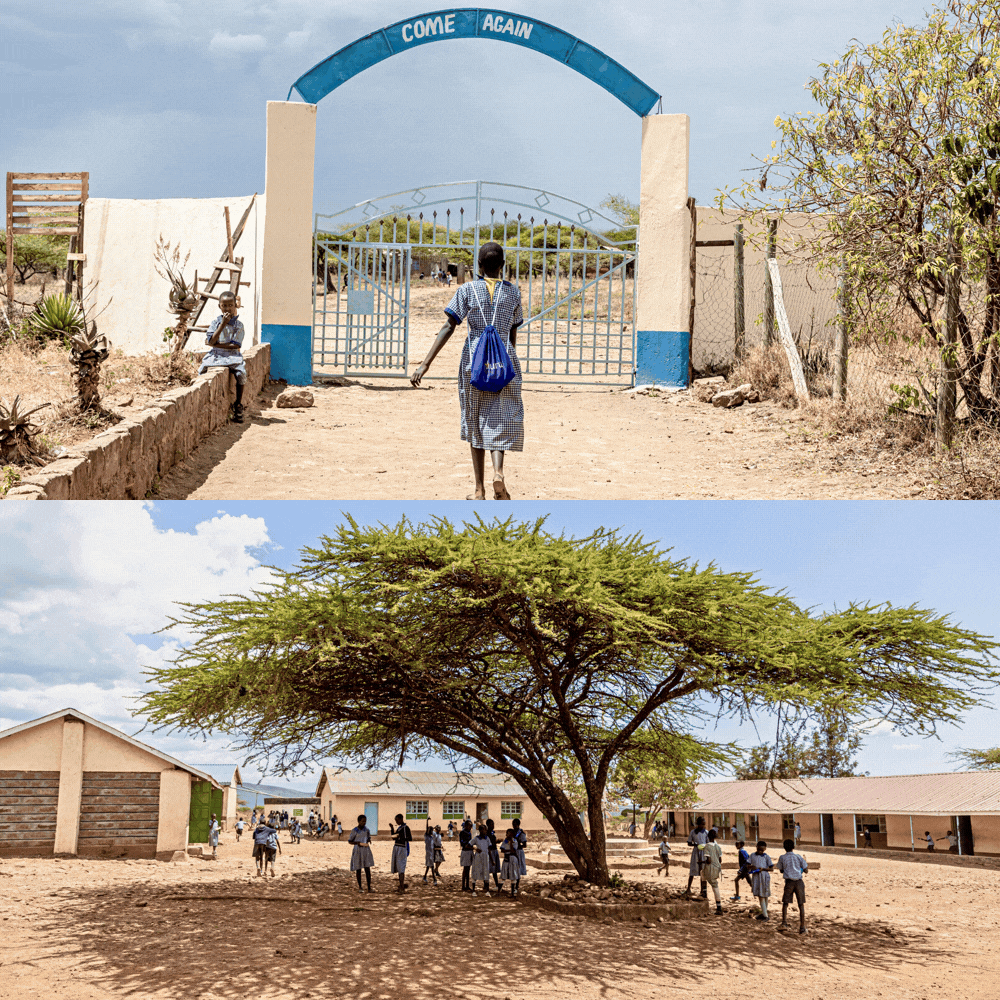
Earlier this year, our team was traveling to Mchungunyi Primary School in Taita Taveta. The school is 20 miles from the nearest town, and eventually the road became too difficult for our vehicle to continue.
So the team parked, picked up the Huru Kits and carried them the rest of the way to the school.
This is part of what our work looks like in Kenya. The girls we serve live in very different places and circumstances. Sometimes reaching them is straightforward. Sometimes it takes much more.
But wherever she is, her period should not determine how far she can go.
At Buguta Primary School, we met 13-year-old Ruphense and 16-year-old Lina.
Ruphense told us how girls make their own menstrual pads when they have nothing else available, using old clothes or cotton, plastic to help prevent leaking, and another layer of cloth sewn around it.
Lina depends on sanitary pads supplied by her school. When those run out, she uses whatever materials are available. Lina is a school leader. She wants to be at school participating and carrying out her responsibilities.
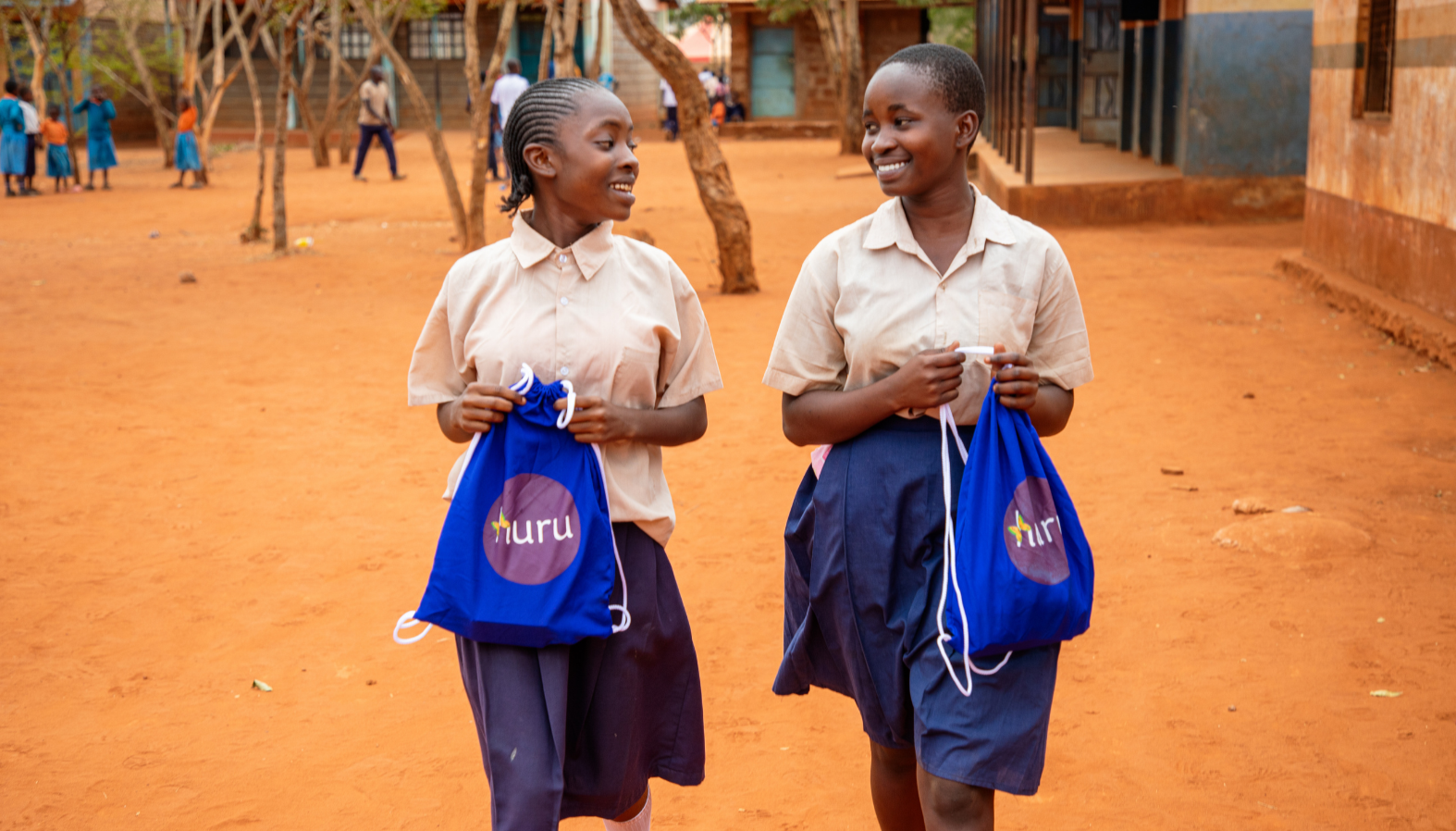
Ruphense and Lina, Buguta Primary School, Taita Taveta County
“Having the Huru pad means I will always have something to use during my period,” she told us. “It will give me the confidence to attend school every day and carry out my duties as a school prefect without worrying.”
It sounds simple. A girl needs something reliable to use so she can get on with her day.
For many girls, it still isn’t simple.
In Rongai and Naivasha, members of Kenya’s Ministry of Education Headquarters joined our team as we traveled to some of the more remote schools we serve. After experiencing the roads and distances themselves, one said, “Now we understand what it truly means to reach the unreached.”
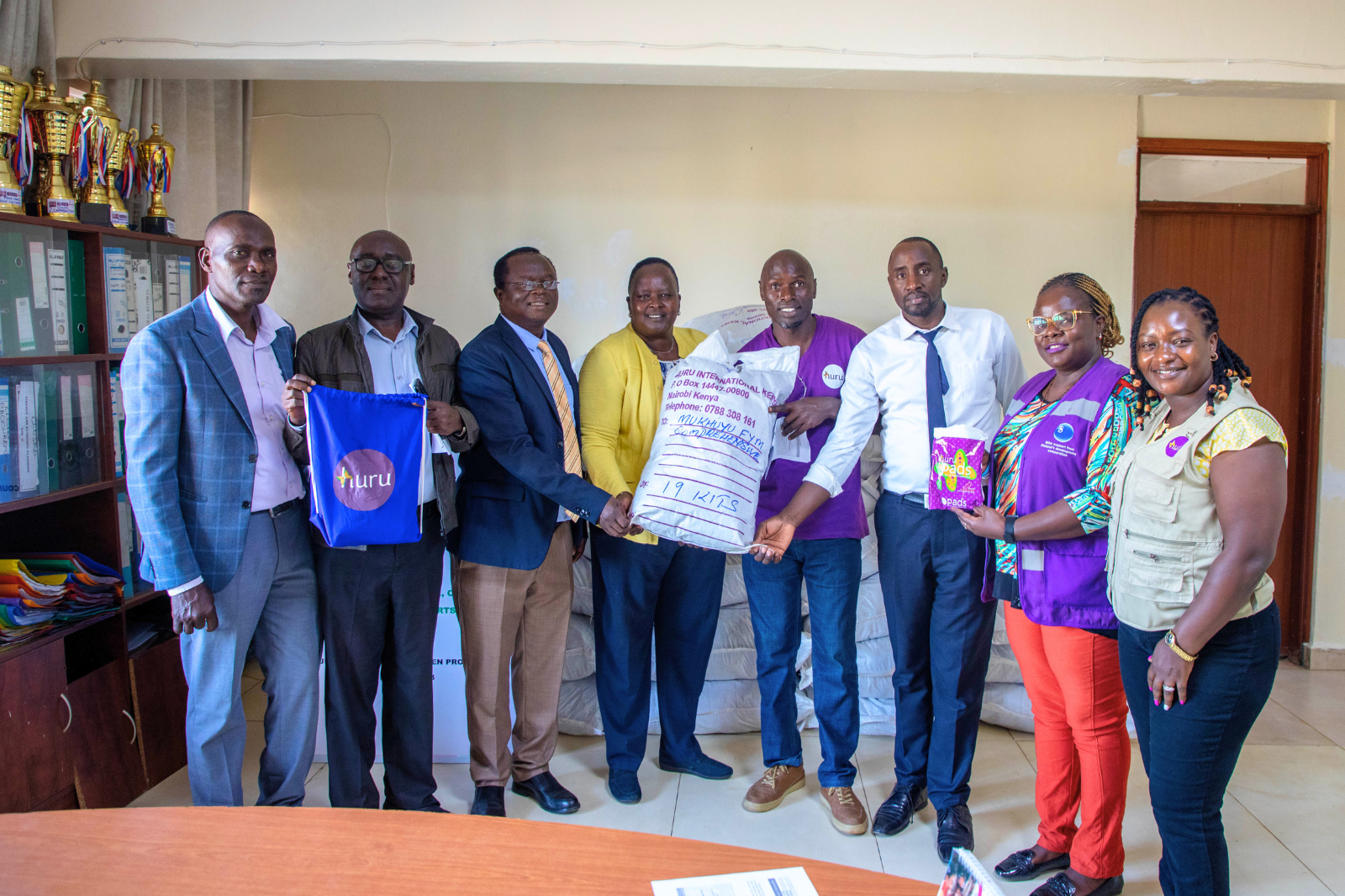
That comment gets to an important part of how Huru works. We partner directly with schools, communities and Kenya’s Ministries of Education and Health to understand where girls are being missed and what support will be most useful.
Schools help us assess need before Kits are distributed, and teachers are equipped to continue answering girls’ questions after our team leaves.
Then we follow up, learn what is working and adjust where needed.
The Kit matters. Education matters. Knowing where the need is matters too.
Girls already know where they want to go
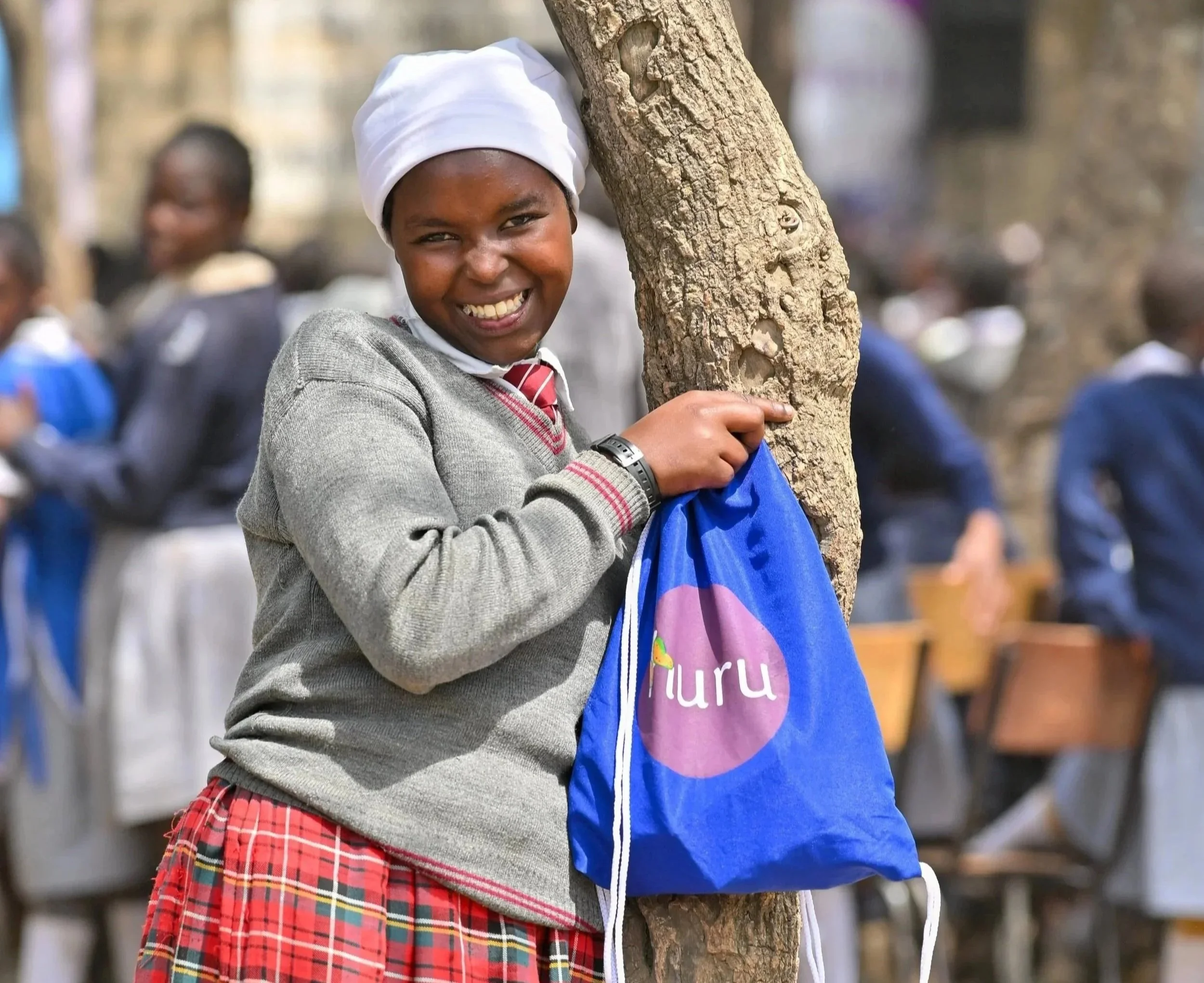
At Ewuaso Oonkidong’i Comprehensive School, we met Beatrice, a Grade 7 student who wants to become a journalist.
“That’s my passion,” she told us. “You talk to people, you interview them, that’s my thing.”
Ewuaso Oonkidong’i Comprehensive School, Kajiado County
She is already part of her school’s Journalism Club. She has reported on new school toilets, the school kitchen and even a fire on campus. She reads mystery books and is already thinking about the stories she wants to tell.
In Naivasha, we met 13-year-old Ann at Mirera Comprehensive School, which serves a large informal-settlement community.
Ann wants to become a fashion designer. There have been times when she has had to use pieces of cloth during her period, even tying them in place with a rubber band. On those days, she would sit alone because she worried people might notice.
“Today I feel relieved,” Ann said. “Huru has taken away my fear and given me strength to stay in school and work towards my dream.”
Beatrice and Ann live in very different communities, and they have different plans for their futures. What they share is the need to manage their periods safely and reliably, without it getting in the way of school or the lives they are working toward.
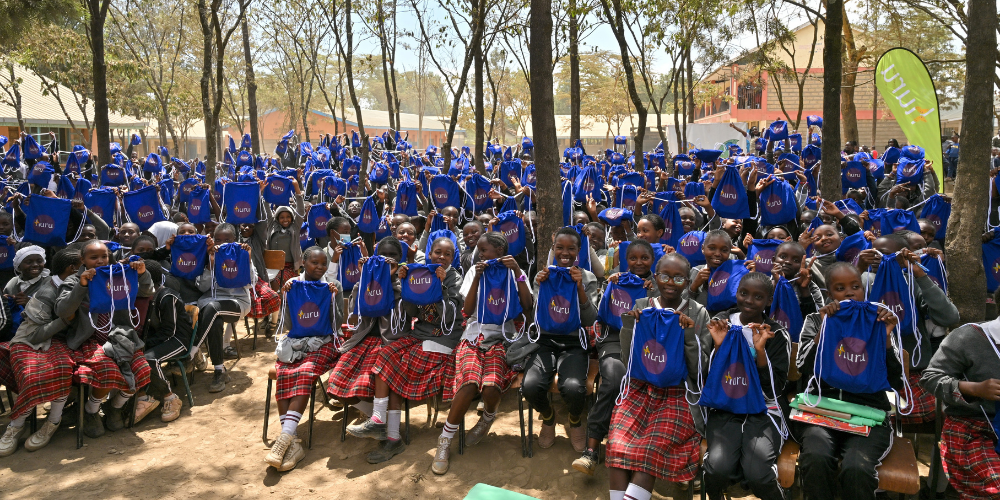
Mirera Comprehensive School, Naivasha, Nakuru County
Why the support around her matters
Our work in Dadaab refugee camp shows why the support around a girl matters as much as the Kit she receives.
Working with UNHCR and other partners, Huru trains teachers in menstrual health, reusable products, life skills and how to support their students. Community leaders and refugee-led organizations are part of the work too, helping address the questions and beliefs that can influence how girls manage their periods.
The approach is the same wherever Huru works. We understand the need first, work with the people who know the community, and provide menstrual products and education together.
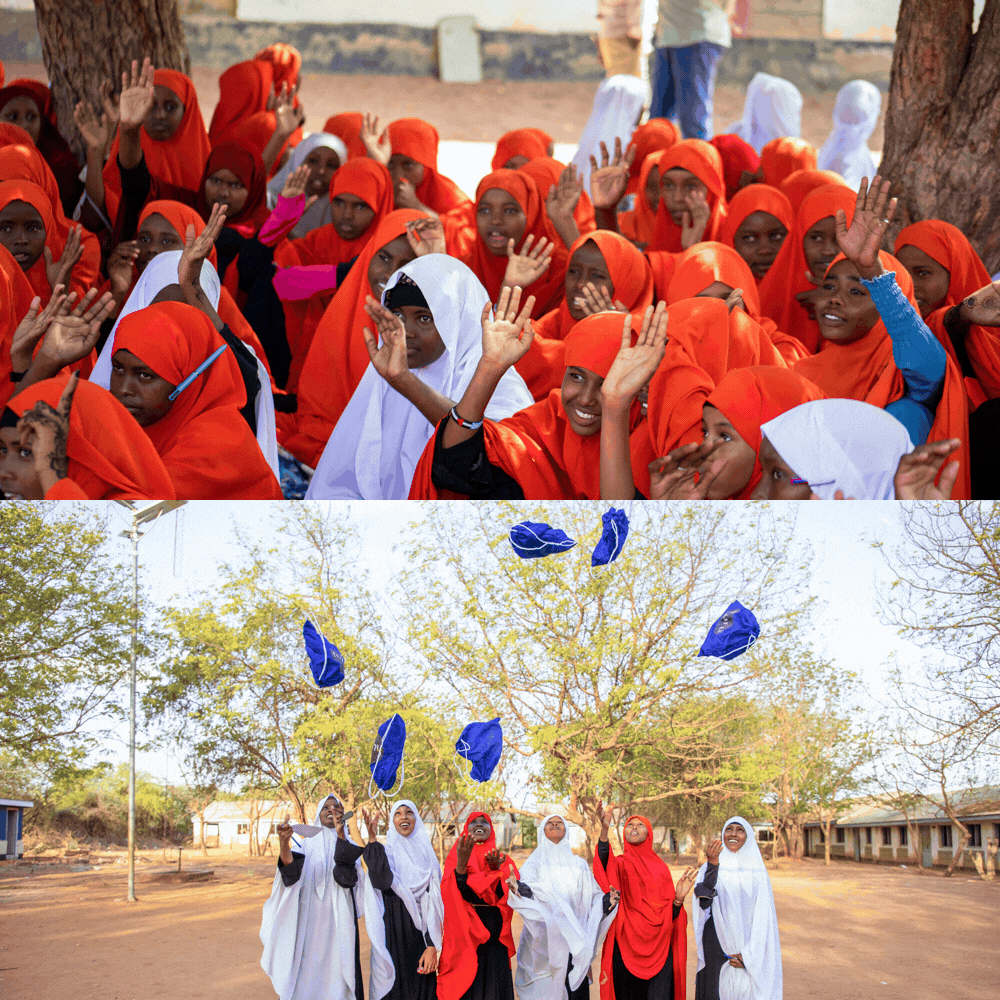
Dadaab Refugee Camp, Garissa County
When our team returned after the training, teachers had already begun sharing what they had learned with students. Huru was also able to help schools work through early challenges as the program moved forward.
Getting a Kit into a girl’s hands is only one part of the job. She also needs accurate information, a product she can rely on and trusted adults who can support her.
Wherever she is
A girl in Dadaab refugee camp does not have the same life as a girl in Taita Taveta. Beatrice’s experience in a Maasai community is different from Ann’s in a crowded settlement in Naivasha.
Their circumstances are different, and the support they need may be different too.
So we listen first.
This year, International Day of the Girl calls on all of us to end child marriage and invest in girls’ rights. That investment takes many forms. It means helping girls stay in school, protecting their health, making sure they have access to the information and support they need, and creating the conditions for them to make choices about their own futures.
I think about Ruphense making do with what she had. Lina wanting to carry out her responsibilities as school prefect without worrying about her period. Beatrice already chasing stories. Ann imagining herself as a fashion designer.
They already have plans for their lives.
Wherever she is, her period should not determine how far she can go.