
Editor’s Note:
Each holiday season, we invite someone from the Huru community to share their Giving Story: what drew them to Huru and why our work matters to them.
This year, we're delighted to feature Dr. Susan S., whose personal experiences growing up helped shape her connection to the girls we serve. In Something We Can Fix, she reflects on her own adolescence, the opportunities her education opened for her, and why every girl deserves that same chance.
We're grateful to Susan for sharing her story. And with that, we'll let her tell it in her own words.
“Something We Can Fix” - a personal giving story shared by Dr. Susan S., Florida
I first heard about Huru from an aspiring journalist, Trisha Mukherjee, who had earned a trip with Nick Kristof, the New York Times columnist, to see some of the troubled places he regularly reports on.
The title of the piece was The Shame that Keeps Millions of Girls Out of School. I suspect it was the mention of shame coupled with girls that caught my attention.
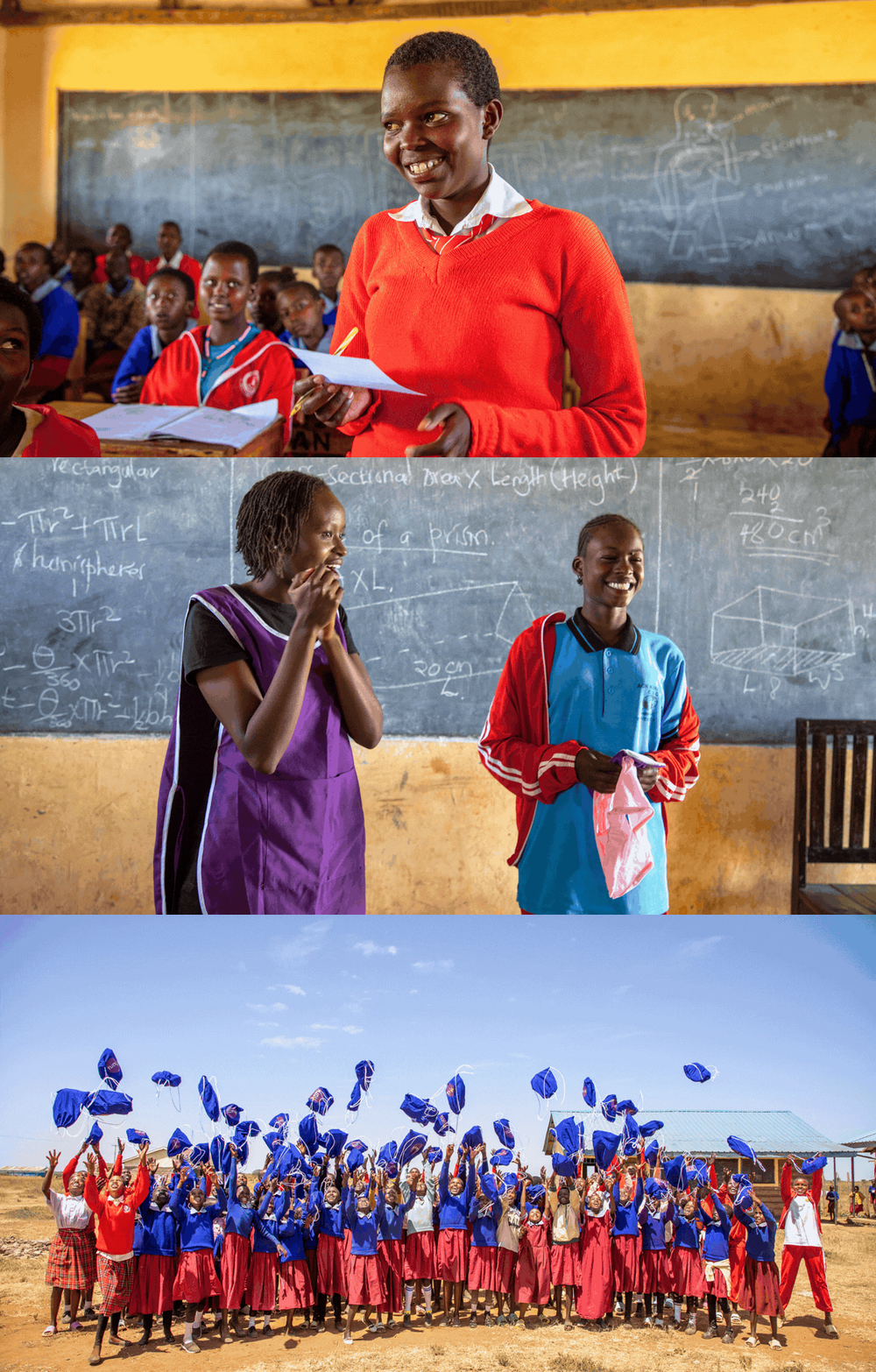
Ms. Mukherjee described a situation in which teenage girls in Africa had to choose every month between staying home from school and therefore possibly compromising their future opportunities, few though they might be, or facing the fear of feeling shamed by soiling themselves with menstrual blood because they didn’t have the technology they needed to protect themselves.
Nothing sears the soul like shame.
Reading the column, I was instantly back in seventh grade, terrified that I would stain my clothing and be exposed to relentless teasing by my fellow seventh graders, presumably for failing to gracefully disguise my transition from tomboy to woman.
I particularly remembered the hot flashes of shame at the very thought of being exposed to the jeers of the boys, not dreaming that they were mostly covering up their own confusion about what was happening to all of us.
The products available for managing our periods were inadequate to the challenge, and my mother made it clear that she didn’t have any helpful hints to share and would rather not talk about it.
I remember feeling I needed help, but I had no idea where that help might come from.
My first thought was how the girls described in the article must feel that same fear and helplessness and confusion about how to manage their monthly periods and still get the education they would need to build satisfying lives in a quickly changing society.
That’s a lot for a teenager without some outside help.
I also thought, out of all the overwhelming misery and despair in this world, here was a situation that actually had a solution if only someone was perceptive enough to see it and willing to do the work to make it happen.
The necessary interventions were conceptually, if not logistically, simple. Find the necessary technology and deliver it. Brilliant! Satisfying! An achievable goal easily measured by attendance statistics.
I would keep giving to Huru just to achieve the immediate goal of relieving the fear of shame, but Huru’s interventions achieve another crucial goal: enabling these girls to prepare themselves for the future.
I remember wondering why my parents invested so much money sending me to college in the late 1950ies when there were so few opportunities for women.
But when Betty Friedan published The Feminine Mystique, I was ready. I applied to graduate school the next week so I was able to immediately start reaping the rewards of social change.
Huru is enabling these young women to be ready to take advantage of whatever changes are coming to their countries and that is worth all of our support.
I am grateful for the opportunity to be a part of anything that relieves young women of any part of the burden of being born female in a world that still makes that a handicap, and be ready for any opportunities that may come their way.