2025: The Work That Matters Most
When I think about 2025, I do not start with numbers or milestones.
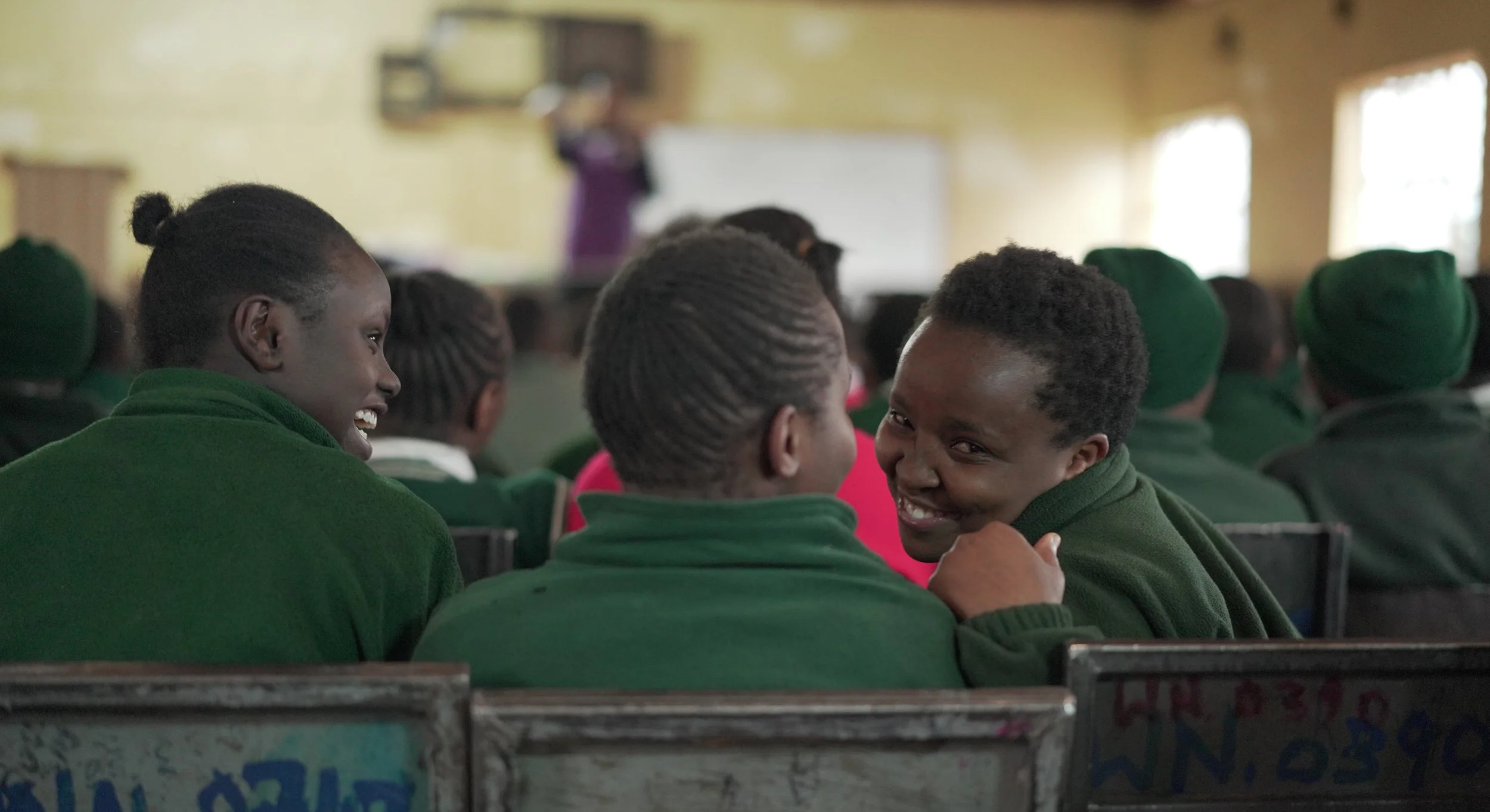
I start with a classroom.
A girl sitting at her desk, present for the full day.
Not distracted.
Not worried about leaving early.
Not calculating how to hide a stain or whether she can make it through another hour.
She is simply there—learning, participating, keeping pace.
That may sound ordinary. It is not.
For too many girls, missing school because they do not have what they need to manage their period has been accepted as part of life. Something to work around. Something to accept. At Huru, we have never believed that.
What the year asked of us
In 2025, our work showed up in school settings where resources were stretched, privacy was limited, and basic facilities, including bathrooms, were often inadequate.
The year did not ask us to be louder.
It asked us to be steadier.
Conditions shifted. Schools were under strain. Communities faced uncertainty. What mattered most was not how quickly we could expand, but how consistently we could show up without lowering standards, without shortcuts, and without losing sight of the girls this work exists for.
What progress looks like on the ground
More than 21,000 girls received Huru Kits this year, each one containing reusable pads designed to last up to two years. For many, it was the first time they had enough supplies to manage an entire period with confidence.
By the end of the year, 80% of girls we reached told us they no longer missed school because of their period. Where published data shows girls in the region losing an average of three to four school days each cycle, schools working with Huru saw that number drop to one. This is not a dramatic change on paper. In a girl’s life, it is everything.
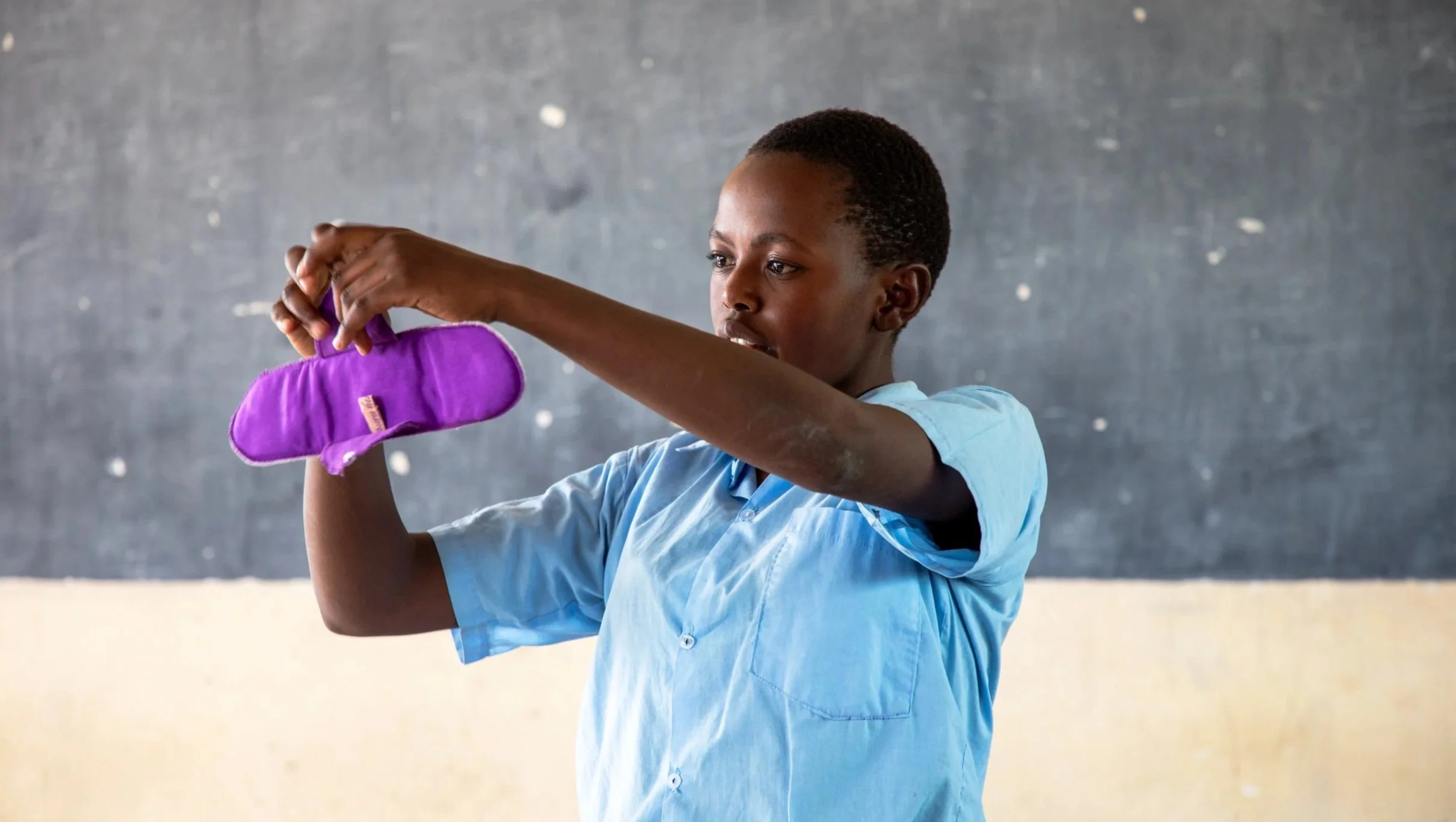
“Since we were given Huru pads, I haven't missed school even once.”
— Joy, Student, Ndabibi Main Comprehensive School
Teachers told us they noticed the difference before the data confirmed it.
Girls were staying through the last lesson of the day. Participation increased. Absences tied to menstruation became less common, and when girls did need support, they asked for it directly—without embarrassment.
Knowledge changes the environment
Access alone is not enough. The environment matters.
In 2025, more than 24,000 girls took part in menstrual health education sessions, building knowledge not only about their bodies, but about what is normal, what is manageable, and what should never be a source of shame. Nearly nine in ten demonstrated increased understanding of menstrual health by the end of those sessions.
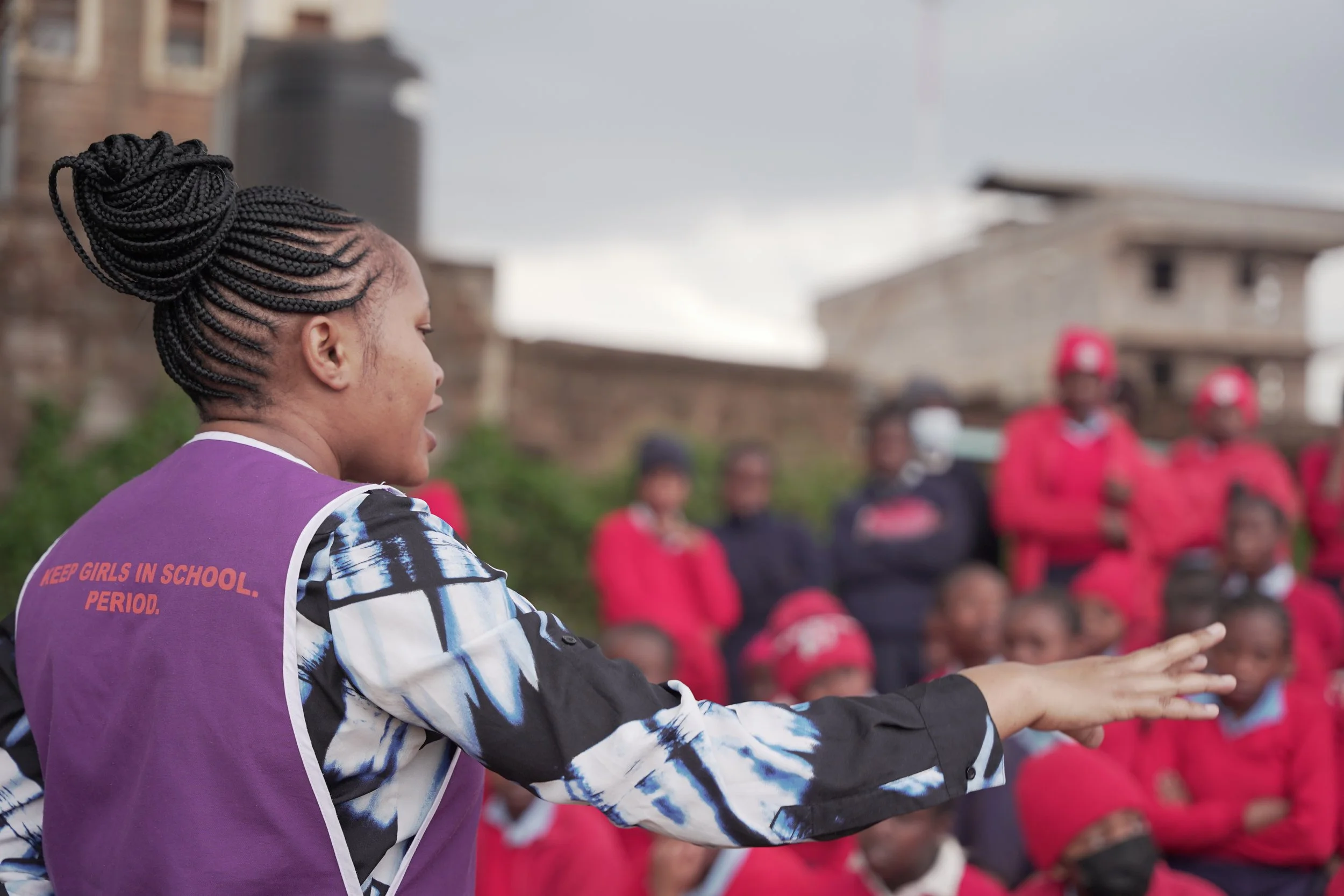
The work did not stop with girls.
Where boys were included—particularly in more fragile settings—more than 5,500 boys received hygiene kits and education, helping to shift the classrooms and communities girls move through every day. These moments matter. A classroom becomes safer when understanding replaces teasing or shame.
“Before, there was shame and a lack of confidence when girls were on their periods. Now they are confident. That problem is not there anymore.”
Being precise about what we do
At Huru, we are very careful about what we promise.
We do not claim to solve every challenge girls face. We do not frame menstrual health as a single answer to deeply rooted issues. What we commit to is solving one problem clearly and well—and doing it in a way that holds up over time.
When a girl has what she needs to manage her period safely, staying in school becomes possible.
When she stays in school, options remain open.
That is not abstract. Teachers feel it. Families feel it. Girls live it.
Consistency is not accidental
That clarity shaped how we worked throughout 2025.
Reusable pads were produced locally—more than 128,000 manufactured this year alone—by women earning steady income through Huru’s production facility. The same work that kept girls in school also supported households and livelihoods.
By the end of 2025:
50 women earned income through pad production
134 young women completed skills training
72 women accessed financial tools through the Succeed Fund, helping them strengthen or start small businesses
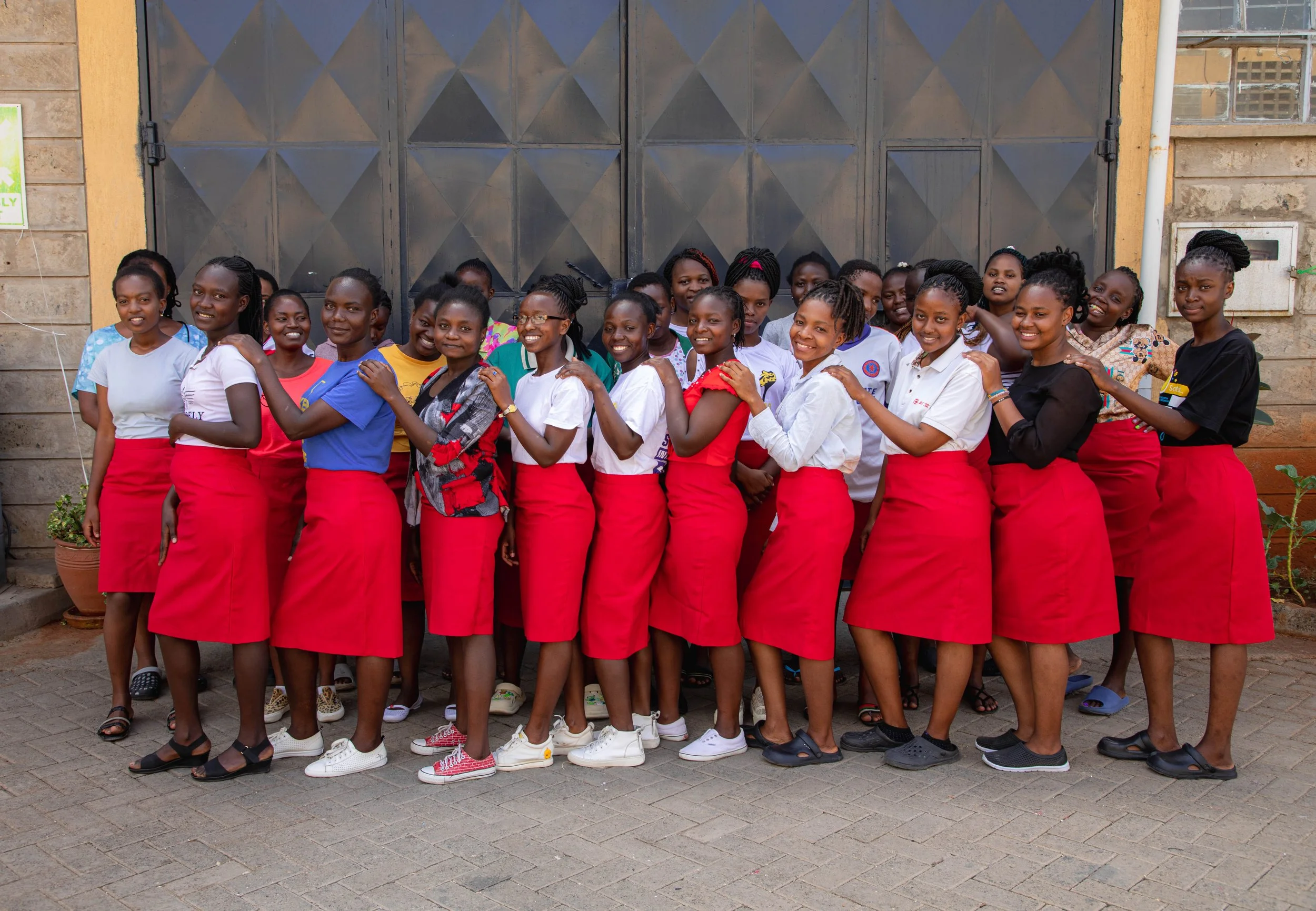
This is what sustainability looks like in practice. Not a single program standing alone, but interconnected work that reinforces itself.
“I understand how hard it is for a girl to miss pads. That’s why, when I’m at work, I take care to do the job well—so no girl has to go without.”
Holding standards where it is hardest
Some of the most demanding work this year took place in environments where privacy is limited and stability is fragile.
In refugee settings, dignity cannot be assumed—it must be protected intentionally. Menstrual health is often overlooked entirely in these contexts. In 2025, we did not lower the bar because the setting was harder.
We held it.
The same standards.
The same quality.
The same insistence that girls deserve reliable solutions, regardless of circumstance.
Carrying clarity forward
As we move into the year ahead, we are carrying forward what 2025 reinforced.
We will continue to prioritize durability over novelty.
Depth over noise.
Outcomes over optics.
We will keep listening closely to schools and communities, because that is where the truth of this work is tested. And we will keep focusing on the conditions that allow girls to stay present—day after day, month after month.
A girl sitting at her desk for a full day of school should never be remarkable.
Until it no longer is, this remains the work that matters most.